
Halloween in Bloomington brings local excitement, colorful costumes, and endless bowls of trick-or-treat candy. For our pets, though, some of the things that make the holiday fun can be confusing or even dangerous. A curious dog may investigate the candy bowl, while a cat might decide a dangling decoration is the perfect new toy.
A little preparation can help prevent an unexpected trip to our veterinarian. These Halloween pet safety tips can help you enjoy the festivities while keeping your dog or cat comfortable and protected.
Why Halloween Can Be Stressful and Risky for Pets
Halloween can change your pet’s normal routine. The doorbell rings repeatedly, unfamiliar people arrive in unusual costumes, and decorations may make familiar rooms look different.
Some dogs happily greet trick-or-treaters, while others may become nervous or overly excited. Cats may hide or try to escape through an open door.
Watch your pet’s behavior throughout the evening. Pacing, trembling, excessive panting, hiding, vocalizing, or repeatedly trying to escape can indicate stress. Giving your pet a quiet room away from the front door may help them feel more secure.
Halloween Candy Dogs and Cats Should Never Eat
Candy is one of the biggest Halloween hazards for pets. Even a small amount of certain ingredients can cause serious problems.
Keep these foods safely away from dogs and cats:
- Chocolate: Chocolate contains theobromine and caffeine, which can be toxic to pets. Dark chocolate and baking chocolate generally contain higher concentrations.
- Xylitol: This sweetener may be found in sugar-free gum, candy, and other products. In dogs, xylitol can cause dangerously low blood sugar and may lead to liver injury.
- Raisins: Never feed raisins to dogs for they can cause severe kidney damage, and even a tiny amount can be dangerous depending on the dog.
- Macadamia nuts: These nuts can cause weakness, vomiting, tremors, and other symptoms in dogs.
- Candy wrappers (foil, plastic, paper): Can cause choking or block the intestines if eaten.
Store candy in a closed cabinet or another area your pet cannot reach. Ask children to keep their treats away from pets, too.
If you think your pet ate something potentially toxic, contact a veterinary professional or pet poison control service promptly. Do not wait for symptoms to appear or try to make your pet vomit unless a veterinary professional specifically instructs you to do so.
Choose Halloween Costumes With Your Pet’s Comfort in Mind
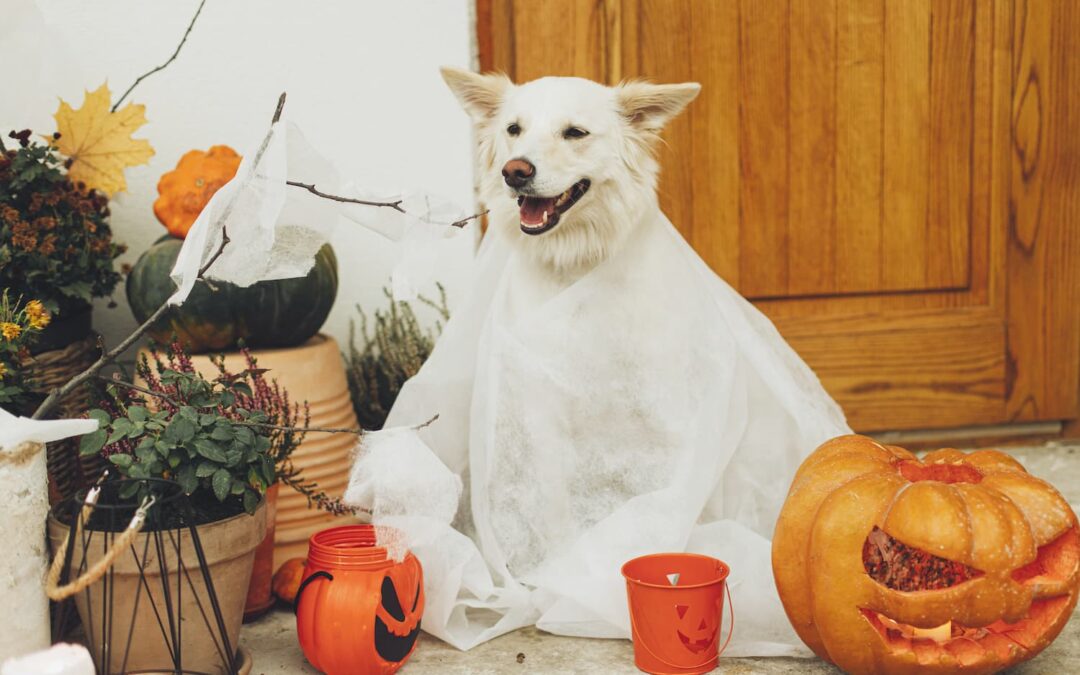
A pumpkin costume may look adorable, but not every pet enjoys dressing up. Pet costume safety starts with paying attention to your dog or cat’s reaction.
Choose a costume that allows your pet to breathe, walk, see, hear, and move normally. Check for elastic bands, strings, buttons, bells, or other small pieces that could become choking hazards. Costumes should never be tight around the neck or chest.
Let your pet try the costume before Halloween. If they freeze, struggle to remove it, pant excessively, hide, or appear distressed, skip the outfit. A festive collar or bandana may be a more comfortable option.
Never leave a costumed pet unattended.
Watch Out for Pet-Safe Halloween Decorations
Decorations deserve a second look if you share your home with an inquisitive pet. Some common Halloween decorations can lead to burns, choking, intestinal blockages, or electrical injuries.
Keep candles and illuminated jack-o’-lanterns somewhere pets cannot reach them. Battery-powered candles can reduce fire and burn risks, although batteries should still remain inaccessible.
Secure electrical cords and string lights so pets cannot chew them. Fake cobwebs, ribbons, string, and dangling decorations can be especially tempting to cats and may be dangerous if swallowed. Glow sticks should also stay out of reach.
A good rule is to view each decoration from your pet’s perspective. If it can be chewed, swallowed, knocked over, or tangled around a pet, move it somewhere safer.
Prevent Door Dashes During Trick-or-Treating
The front door may open dozens of times on Halloween night. Even pets that usually stay close to home can become frightened by masks, costumes, voices, or sudden noises.
Before trick-or-treaters arrive, consider placing your pet in a comfortable room with water, bedding, toys, and familiar sounds. Check that exterior doors, gates, and windows are secure.
Your dog or cat should also have current identification information. If you take your dog outside during Halloween festivities, use a secure leash and keep some distance from crowded sidewalks if your dog appears uncomfortable.
Know When a Halloween Mishap Needs Veterinary Attention
Despite careful planning, accidents can happen. Contact our veterinary team promptly if your pet eats chocolate, xylitol, raisins, medication, a candy wrapper, or another potentially harmful item.
Other signs that warrant prompt attention include repeated vomiting, difficulty breathing, tremors, weakness, collapse, burns, significant lethargy, or signs that your pet may have swallowed a foreign object.
Knowing what your pet ate, approximately how much, and when it happened can help our veterinarian determine the appropriate next steps.
For ongoing medications and veterinarian-recommended pet products, South Hyland Pet Hospital clients can also visit our online pharmacy.
A Safer Halloween Starts Before the Doorbell Rings
Before Halloween evening begins, put candy away, check your decorations, secure doors and gates, and prepare a quiet retreat for your pet. If your dog or cat has a history of significant fear or anxiety during busy holidays, talk with our veterinary team ahead of time. Planning before the festivities begin gives you more options for helping your pet stay comfortable.
Keep the Frights for the Costumes, Not Your Pet
Halloween should leave you with fun photos and happy memories, not an unexpected pet emergency. By keeping candy out of reach, choosing costumes carefully, securing decorations, and creating a calm space during trick-or-treating, you can make the holiday safer for every member of your family.
If you have questions about Halloween safety for dogs or cats, or your pet needs veterinary care in Bloomington, MN, contact South Hyland Pet Hospital at (952) 884-1868 to learn more about our veterinary services.
Image credit: Envato
