
Have you ever buckled up your seatbelt, turned on the seat warmer, and glanced in the rearview mirror to see your dog pacing in the backseat?
In Minnesota, we know that winter driving requires extra caution. We check our tires, scrape our windshields, and drive slower on icy patches. Yet, it is easy to assume that because our pets are family, they’ll naturally be fine riding along with us unrestrained.
The reality is that winter road conditions make vehicle safety even more critical. Sudden stops on slick roads can be dangerous for everyone, but especially for unsecured pets. At South Hyland Pet Hospital, we want to help you protect your furry family members, whether you are heading up north to a cabin or just navigating snowy streets in Minneapolis.
Here is the safety checklist many pet parents miss and how to prepare your pet for safer cold-weather travel.
Why Restraint Matters (Especially on Icy Roads)
It’s easy to underestimate the dangers of letting your pet roam freely in the car. However, when road conditions are unpredictable, an unrestrained pet poses significant risks:
- Injury during sudden stops: On slippery roads, you are more likely to brake hard or slide. An unsecured pet can be thrown into the dashboard or seats, causing serious injury even at low speeds.
- Driver distraction: A pet climbing onto your lap or pawing at the window is dangerous in dry conditions, but on ice, that split-second distraction can cause an accident.
- The Projectile Factor: According to safety studies from Bark Buckle UP,, an unrestrained 60-pound dog in a 35 mph crash can generate 2,700 pounds of force. This endangers the pet, the driver, and other passengers.
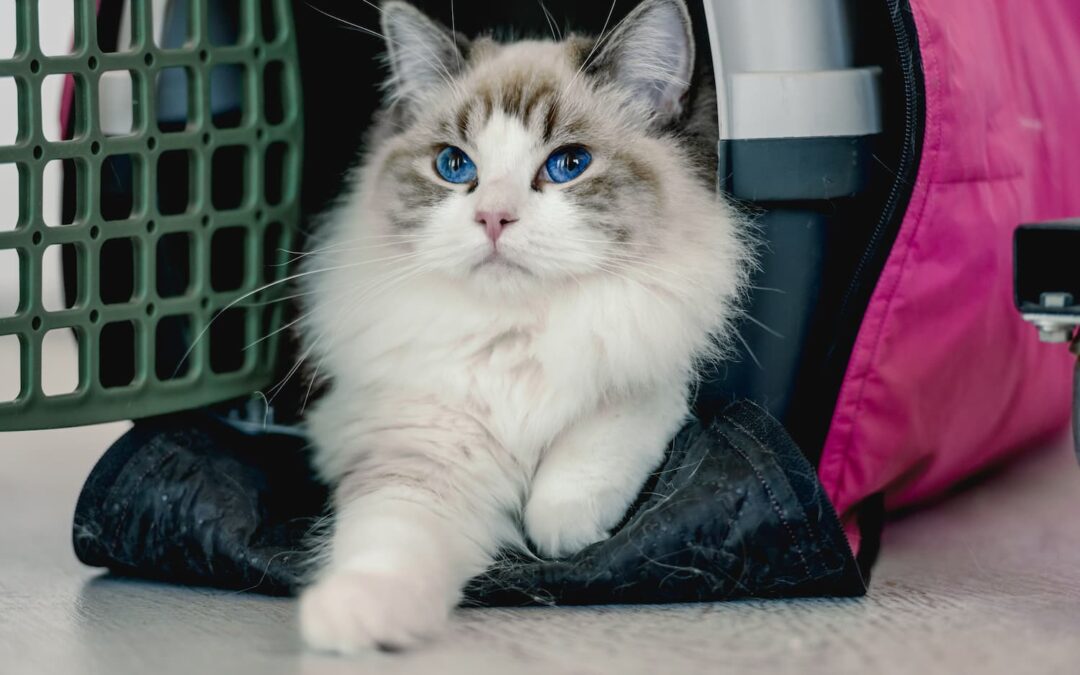
For cat owners, travel can be even trickier. Anxious cats may hide under pedals or bolt when a door opens—a nightmare scenario in freezing temperatures.
The Winter Travel Safety Checklist
We’ve all seen photos of dogs with their heads out the window, enjoying the breeze. In winter, however, this exposes them to freezing wind chill and debris.
Here is a checklist to keep your pet safe and warm the next time you load up the car:
- Crash-Tested Restraints: Whether it’s a harness seatbelt, travel crate, or pet booster seat, restraint is non-negotiable. Look for products that are crash-tested and appropriate for your pet’s size.
- The Back Seat is Best: Airbags are designed for adults, not animals. Keep your pet in the back seat to avoid injury from airbag deployment during a slide or collision.
- Lock Windows and Doors: Curious paws can accidentally hit power window switches. Keep child locks on to prevent accidental escapes.
- Winter Emergency Kit: In addition to water and bowls, your winter kit should include extra blankets, paw protection (booties or wax), and a copy of medical records. If your car breaks down in the cold, keeping your pet warm is the priority.
- Calming Aids: Winter travel often means louder noises (snow tires, wind) and bumpier rides. If your pet is anxious, ask us about vet-approved calming aids available through our online pharmacy.
The Cold Weather Warning: Never Leave Them Behind
Winter errands in Minneapolis can be freezing, but the car is not a safe place to leave a pet waiting.
- The “Icebox” Effect: Just as cars heat up in summer, they turn into refrigerators quickly in winter. Temperatures inside a parked car can drop rapidly, putting pets at risk of hypothermia.
- Paw Safety: Salt and de-icers on parking lot pavement can burn sensitive paws and are toxic if licked off. Wipe your pet’s paws immediately after they’ve walked on treated surfaces.
Don’t Forget: A Pre-Travel Health Check
If you are planning a winter getaway or crossing state lines, schedule a pre-travel checkup. Even in winter, parasites don’t take a vacation. Ticks can survive in slightly warmer micro-climates, and fleas thrive in warm cars and homes.
Whether you are road-tripping to northern Minnesota or just heading across town, make sure your pet is:
- Up to date on vaccinations.
- Protected against heartworm, fleas, and ticks.
- Microchipped with updated contact info (vital if a pet gets lost in a snowstorm).
Give Your Pet the Safe Ride They Deserve
Keeping your pet safe on winter roads isn’t complicated—it just takes the right tools. By checking off these safety items, you are reducing the risk of injury and ensuring that your winter adventures remain happy memories.
Need to restock your travel essentials? You can find calming aids, travel crates, and parasite prevention in our online pharmacy.
If you have questions about the best restraint for your pet or need to update their vaccines before a trip, our team at South Hyland Pet Hospital is here to help.
Call us at (952) 884-1868 or schedule an appointment online today.
