
Your pet’s wagging tail, playful zoomies, or cozy cuddles are daily reminders of how much they mean to you. You probably keep a close eye on their food, exercise, and vaccines but what about their teeth?
Just like people, dogs and cats are vulnerable to dental problems. In fact, dental disease is one of the most common conditions seen in pets over the age of three. The tricky part? Most pets won’t show obvious signs until their mouths are already sore or infected.
That’s where regular dental checkups come in. Spotting the early signs of dental disease can help prevent pain, save teeth, and protect your pet’s overall health. Not sure what to look for? Here are the most common signs that your pet may need a dental exam.
SIGN #1: Bad Breath That Doesn’t Go Away
Yes, dogs and cats can have less-than-fresh breath from time to time but if you’re recoiling every time your pet gives you a kiss, it might be a sign of something more serious. Persistent bad breath can indicate bacterial buildup, infected gums, or decaying teeth.
Our veterinary team often hears, “I thought stinky breath was normal for pets.” It’s not. Healthy mouths shouldn’t smell foul, so if your pet’s breath is constantly unpleasant, it’s time to schedule a dental checkup.
SIGN #2: Drooling More Than Usual
Some breeds naturally drool more than others (we’re looking at you, Saint Bernards), but a sudden increase in drooling can be a red flag. Pets often drool when they’re dealing with oral pain, a loose tooth, or even a mouth infection.
Keep an eye out for thick, stringy drool or drool that contains blood. If your pet starts leaving wet spots around the house or has trouble keeping their mouth closed, it’s worth letting our veterinarian take a look.
SIGN #3: Red, Swollen, or Bleeding Gums
Your gums should feel firm and look pink. If they are red or swollen, they may not be healthy. Inflammation along the gumline is one of the earliest signs of gingivitis, which can progress into more advanced periodontal disease if left untreated.
If you notice blood on your pet’s chew toys, food bowl, or when they yawn, don’t wait. Bleeding gums are a sign of active dental disease and pain.
SIGN #4: Visible Tartar or Discolored Teeth
Over time, plaque hardens into tartar, which often appears as yellow or brown crust along the teeth especially near the gumline. Tartar buildup can push bacteria beneath the gums, leading to infection and tooth loss.
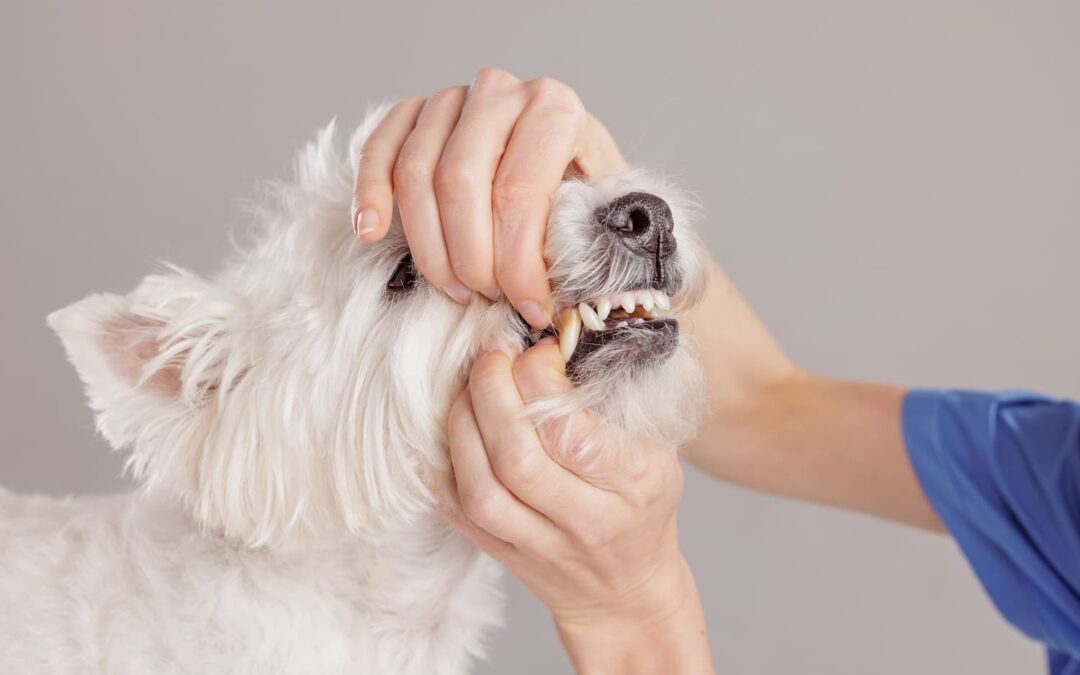
A visual inspection at home can help, but our veterinary team can give you a full assessment during a professional dental exam. We’ll let you know if a cleaning is needed and how to prevent tartar buildup going forward.
SIGN #5: Trouble Eating or Chewing
Is your dog dropping kibble from one side of their mouth? Does your cat walk away from her bowl without finishing? Painful teeth and gums can make chewing uncomfortable, even for the most food-motivated pets.
Watch for changes in eating habits, such as avoiding crunchy foods, chewing slowly, or eating only soft items. These behaviors often point to dental discomfort that needs attention.
SIGN #6: Pawing at the Mouth or Face
Pets can’t tell us when something hurts, but they can show us through their behavior. Unusual behaviors like face-dragging or mouth-pawing often indicate your pet is trying to relieve oral sensitivity.
This is especially common in pets with a cracked tooth, mouth ulcer, or infection. Our veterinarian can perform a thorough oral exam to identify the cause and recommend treatment.
SIGN #7: Loose, Broken, or Missing Teeth
Adult pets should not be losing teeth. If you notice a tooth that seems wiggly, fractured, or missing entirely, it’s likely a sign of advanced dental disease. Infections in the mouth can destroy the structures holding teeth in place, making extractions necessary.
Addressing these issues early can often save teeth and reduce pain. If your pet’s smile isn’t looking quite right, let us help get it back on track.
SIGN #8: Behavior Changes
Is your normally friendly dog becoming irritable? Is your affectionate cat suddenly hiding or refusing to play? These subtle shifts in mood could be your pet’s way of expressing pain or discomfort.
Dental disease affects more than just the mouth. It can also impact appetite, energy levels, and overall mood. If your pet isn’t acting like themselves, a dental issue might be the reason.
When to Schedule a Dental Exam in Minneapolis
We recommend yearly dental checkups for most dogs and cats, even if they aren’t showing obvious symptoms. Preventive care helps catch problems early and avoids more invasive (and expensive) procedures later.
At South Hyland Pet Hospital, our veterinarian provides gentle, thorough dental care for pets in Bloomington and the greater Minneapolis area. Whether your pet needs a routine cleaning or treatment for a painful condition, we’re here to help every step of the way.
Keep That Tail Wagging: Start at Home
In between dental visits, there’s a lot you can do to protect your pet’s teeth:
- Brush their teeth daily or several times a week with pet-safe toothpaste
- Offer dental chews or toys that help reduce plaque
- Use water additives or dental rinses designed for pets
- Avoid giving bones, antlers, or hard chew items that can break teeth
You can find vet-approved dental care products in our online pharmacy, delivered right to your door.
Don’t Wait Until It Hurts
Your pet may not be able to say, “My mouth hurts,” but the signs are often right there if you know what to look for. If you’ve noticed any of the symptoms above, or if your pet is due for a routine dental checkup, our veterinary team at South Hyland Pet Hospital is here to help.
Give us a call at (952) 884-1868 to request an appointment. We’ll help keep your pet’s smile healthy and their tail wagging.
